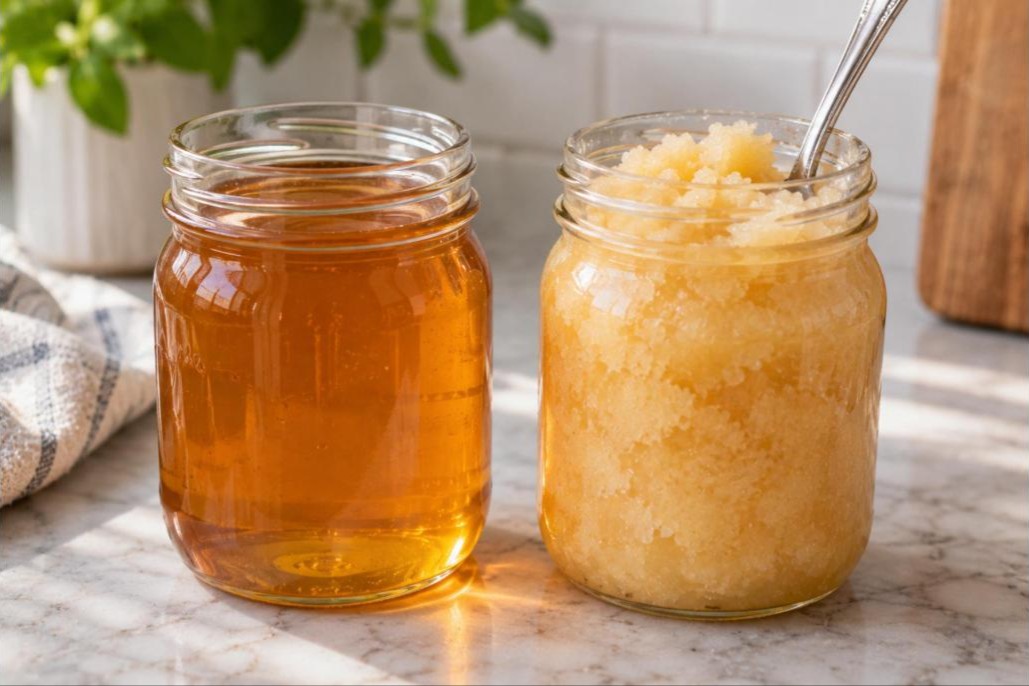
Quick answer: Honey crystallizes because it’s a supersaturated sugar solution: it holds more dissolved glucose than water can normally keep in solution, so over time the glucose separates out as crystals. Crystallized honey is not spoiled. To liquefy it, set the jar in warm (not boiling) water, around 95–110°F, and stir occasionally until smooth. Avoid the microwave and high heat, which can scorch the honey and degrade its flavor and enzymes.
Few kitchen questions come up as often as “my honey turned solid, is it bad?” The good news: crystallization is a natural process, often a sign of raw, minimally processed honey, and it’s completely reversible. Here’s what’s going on and how to handle it.
The science: why honey crystallizes
Honey is roughly 80% sugar and 17–18% water. The two main sugars are fructose and glucose. Fructose stays dissolved easily, but glucose is less soluble, so it tends to come out of solution and form tiny crystals. Those crystals act as seeds for more crystals until the whole jar sets. Three things control how fast it happens:
- Glucose-to-fructose balance: honeys higher in glucose crystallize faster.
- Particles: pollen grains, wax bits and air bubbles give crystals something to form around. That’s why raw honey often crystallizes sooner than heavily filtered supermarket honey.
- Temperature: honey crystallizes fastest at around 50–60°F, which unfortunately matches many cool pantries and is slowed in a warm room.
Which honeys crystallize fastest?
| Crystallizes quickly (days to weeks) | Crystallizes slowly (months to years) |
|---|---|
| Canola (rapeseed) | Acacia (black locust) |
| Clover | Tupelo |
| Dandelion | Sage |
| Cotton | Jarrah |
| Alfalfa | Sourwood |
Slow-crystallizing honeys are naturally high in fructose relative to glucose.
Is crystallized honey safe to eat?
Yes. Crystallized honey has the same nutrition and keeps just as well. Many people prefer its spreadable texture on toast. The only time to worry is if you see foam, a sour or fermented smell, or separation with a watery layer on top, which can mean the honey had too much moisture and has started to ferment.
How to decrystallize honey (the safe way)
- Use a glass jar. If your honey is in a plastic bottle, scoop it into a heat-safe glass jar first.
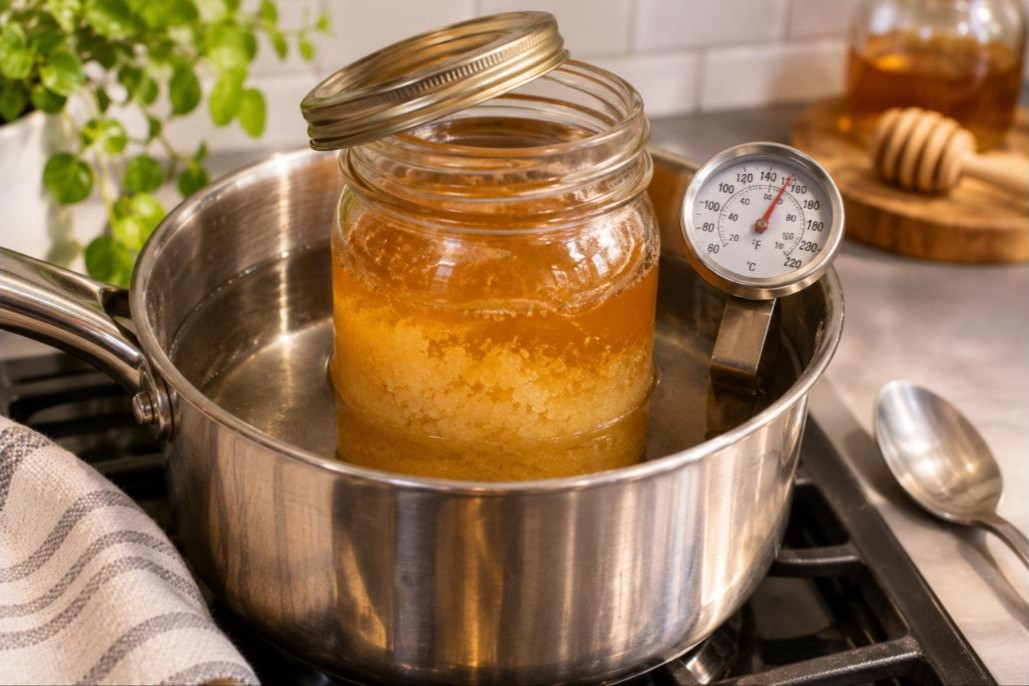
- Make a warm water bath. Fill a pot with warm water around 95–110°F. Bees keep their hive near 95°F, so this range is gentle on honey.
- Set the jar in the water with the lid loosened, keeping the water level below the lid.
- Stir every 10–15 minutes and refresh the warm water as it cools. Most jars liquefy within 30 minutes to a couple of hours.
- Dry and store at room temperature once smooth.
For large buckets, a warming blanket or a cooler with a jar of warm water works well. Our guide to honey quantities helps if you’re dealing with bulk jars.
What not to do
- Don’t microwave on high or boil it. High heat darkens honey, changes its flavor and degrades enzymes. It can also melt plastic containers.
- Don’t add water. Extra water raises moisture content and can lead to fermentation.
- Don’t refrigerate to “fix” it. Cold speeds crystallization.
How to slow crystallization
- Store honey at warm room temperature (about 70–80°F), not in a cold cupboard or the fridge.
- Keep the lid tight so it doesn’t absorb moisture.
- Use a clean, dry spoon every time; crumbs and moisture seed crystals.
- Choose high-fructose varieties like acacia if you want honey that stays liquid.
Turn it into creamed honey instead
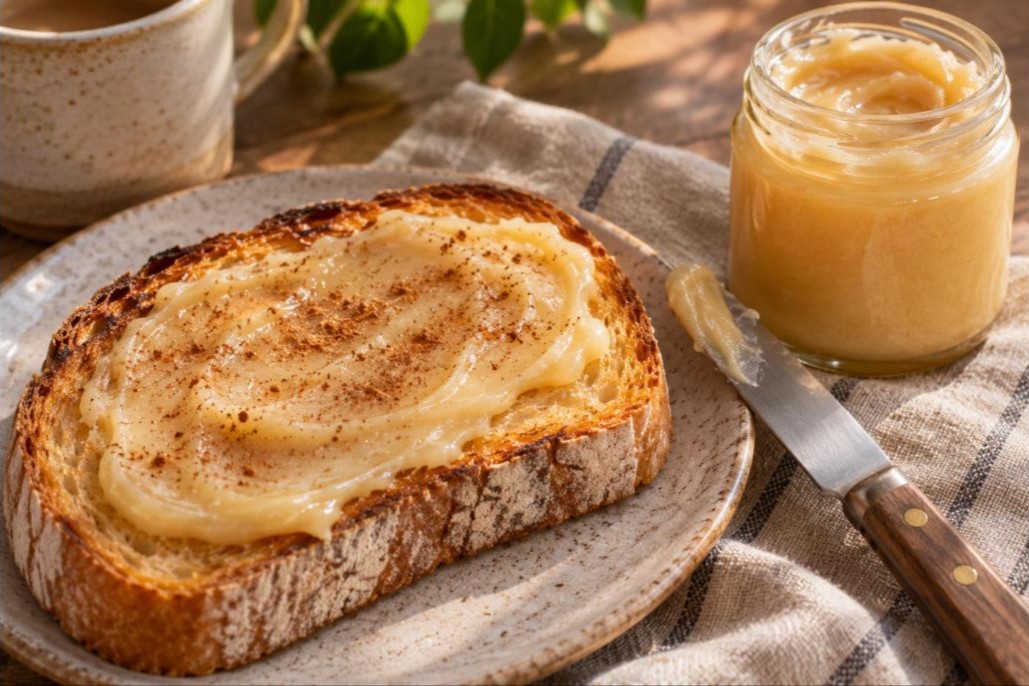
If your honey is crystallizing anyway, you can control the process to get a smooth, fine-grained spread called creamed honey. Mix 1 part existing creamed honey into 9 parts liquid honey and keep it around 57°F for a week or two. Try our creamed cinnamon honey recipe. Crystallized honey also works perfectly in tea, baking and marinades, no melting needed.
Glucose content by honey type
How fast honey crystallizes depends mostly on its ratio of glucose to fructose and on its water content. Honeys with more glucose set faster. Typical patterns:
| Honey | Typical crystallization |
|---|---|
| Canola (rapeseed), dandelion | Very fast, often within days to weeks |
| Clover, alfalfa, goldenrod, aster | Fast, within weeks to a few months |
| Wildflower, orange blossom | Moderate, varies by batch |
| Buckwheat, avocado | Moderate to slow |
| Acacia (black locust), tupelo, sage | Very slow; can stay liquid for a year or more |
These are general patterns. Pollen, tiny wax particles and air bubbles act as “seeds” for crystals, which is why raw, minimally filtered honey usually crystallizes faster than heavily filtered supermarket honey.
The temperature effect
Honey crystallizes fastest at cool room temperatures, roughly 50–59°F (10–15°C), such as a cold pantry or garage. Warmer storage, around 70–80°F, slows crystallization. Very cold storage in the freezer stops it almost completely because the honey becomes too thick for crystals to grow. The refrigerator, on the other hand, sits close to the ideal crystallizing range, which is why honey stored there sets quickly.
Crystallized or fermented? How to tell the difference
Crystallization is harmless. Fermentation means the honey had too much water and yeast began to grow. Signs of fermentation include:
- A sour, alcoholic or yeasty smell
- Foam or bubbles on top that keep forming
- A thin, watery layer separating above a crystallized layer
- A lid that bulges or hisses when opened
Slightly fermented honey is not dangerous, but the flavor changes. Many people use it for cooking, baking or making mead rather than eating it straight. Keep the lid tight and use dry spoons to prevent moisture from getting in.
Ways to use crystallized honey
- Spread it on warm toast or biscuits like butter. Crystallized honey does not drip.
- Stir it into hot tea, coffee or oatmeal, where it dissolves quickly.
- Use it in baking, measured by weight, since it dissolves in the batter.
- Whip it with a mixer to make a smooth spread similar to creamed honey.
Frequently Asked Questions
Does crystallized honey mean it’s fake?
No. Real honey commonly crystallizes, especially raw honey. Crystallization alone doesn’t indicate adulteration, and some pure honeys (like acacia) rarely crystallize at all.
Can you microwave honey to decrystallize it?
It’s better not to. If you must, use short bursts at low power and stir between them, in a microwave-safe glass container. A warm water bath is gentler and more even.
How long does it take honey to crystallize?
Anywhere from a few days to a few years, depending on the floral source, how it was processed and storage temperature.
Does crystallized honey go bad?
No. Properly stored honey has a very long shelf life. Watch only for signs of fermentation such as foam, a sour smell or a watery layer.
What temperature should I warm honey to?
Keep it around 95–110°F. That’s warm enough to dissolve crystals without damaging flavor.