Quick answer: Jarrah honey comes from the nectar of the jarrah tree (Eucalyptus marginata), which grows only in the southwest of Western Australia. It’s dark amber with a rich, caramel-like flavor, is less sweet than many honeys, and crystallizes very slowly because it’s high in fructose and low in glucose. Jarrah is prized for its antimicrobial activity, which is sold as a “TA” (Total Activity) rating such as TA 10+ or TA 20+.
Jarrah is often called “Australia’s answer to manuka.” Both are premium, bioactive honeys from native trees, but they get their activity from different compounds and they taste quite different. Here’s what to know before you buy a jar.
Where jarrah honey comes from
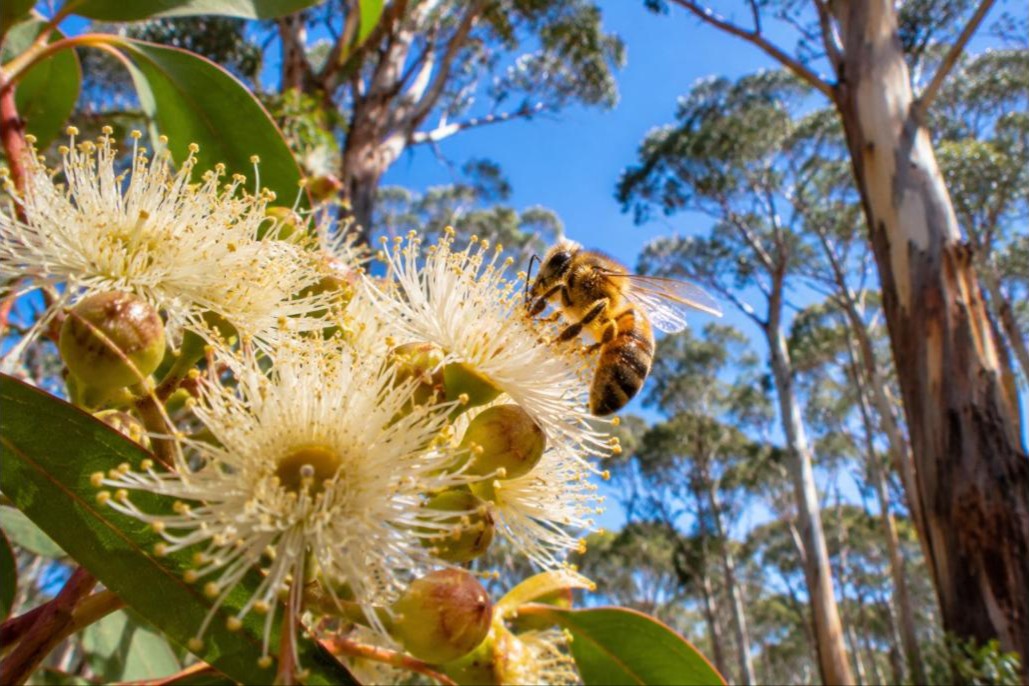
Jarrah trees are tall, slow-growing eucalypts native to the forests stretching roughly from north of Perth down to Albany in Western Australia. They don’t flower every year, often flowering on a roughly two-year cycle in late spring to early summer, which makes jarrah honey seasonal and relatively scarce. Western Australian beekeepers also benefit from the state’s isolation, so their colonies are managed in a region that has historically been free of varroa mites, unlike most of the beekeeping world.
What does jarrah honey taste like?
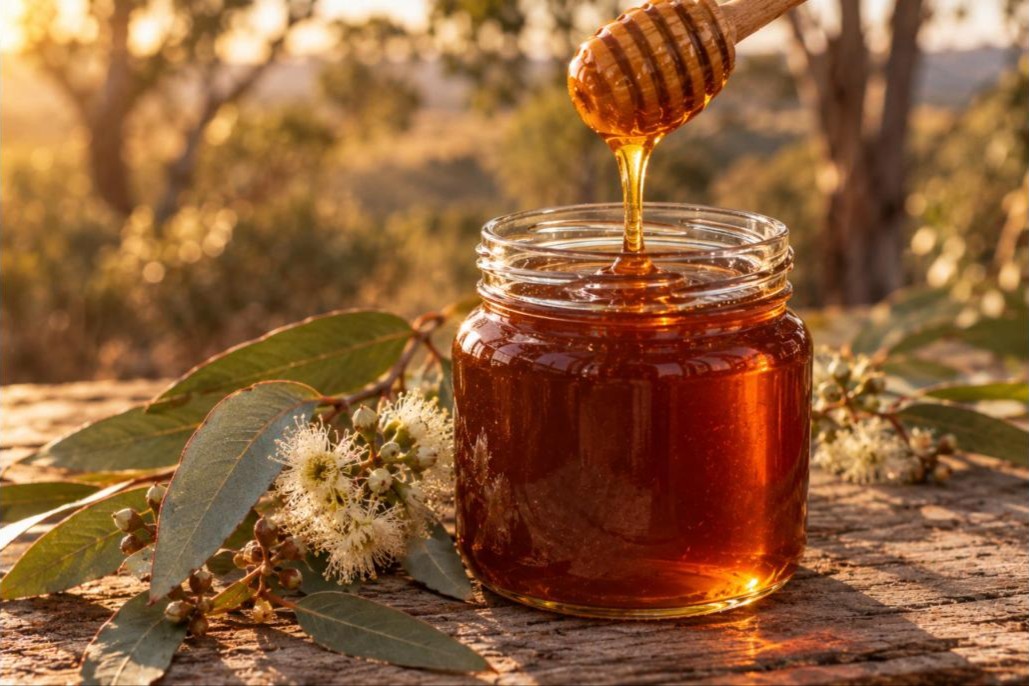
Jarrah is thick and dark amber, with flavors usually described as caramel, toffee or butterscotch, plus a slightly nutty, malty finish. It’s noticeably less cloying than light honeys. Because it’s low in glucose and high in fructose, pure jarrah stays liquid for a long time. If you’re curious why, see our explainer on why honey crystallizes.
What does “TA 10+” mean?
TA stands for Total Activity, a lab measure of a honey’s antibacterial strength compared with a phenol solution. Most of jarrah’s activity comes from naturally generated hydrogen peroxide (produced by an enzyme bees add to nectar), with some non-peroxide activity as well. Common grades you’ll see:
| Label | What it suggests | Typical use |
|---|---|---|
| TA 10+ | Entry-level bioactive grade | Everyday eating, tea, toast |
| TA 20+ | Higher activity | Daily spoonful, smoothies |
| TA 30+ / 35+ | High activity, highest price | Premium jars, gifting |
Higher numbers mean higher measured activity, not necessarily better taste. Because hydrogen peroxide activity can decline with heat and age, store jarrah below about 77°F (25°C) and don’t stir it into boiling liquids if you’re paying for the activity.
Jarrah honey vs. manuka honey
| Jarrah | Manuka | |
|---|---|---|
| Source | Eucalyptus marginata, Western Australia | Leptospermum scoparium, New Zealand and Australia |
| Main activity | Hydrogen peroxide (TA rating) | Methylglyoxal, or MGO (UMF or MGO rating) |
| Flavor | Caramel, toffee, less sweet | Earthy, herbal, slightly bitter |
| Texture | Liquid, slow to crystallize | Thick, often creamy or set |
| Price | Premium, usually below manuka | Premium to very high |
The two ratings systems aren’t directly interchangeable, so don’t compare a TA number to a UMF or MGO number. If you’re weighing manuka too, our guide to buying manuka honey explains its grades.
Jarrah honey benefits: what the research says
University of Western Australia researchers have studied jarrah and the related marri honey and found meaningful antibacterial activity in the lab, including activity largely driven by hydrogen peroxide. Studies have also measured jarrah’s high fructose share (roughly twice its glucose content), which is part of why it’s sometimes promoted as having a lower glycemic impact than many honeys. Keep claims in perspective: jarrah is still mostly sugar, lab results don’t automatically translate to medical treatments, and anyone managing blood sugar should treat it like any other honey. Like all honey, never give it to infants under 12 months.
How to use jarrah honey
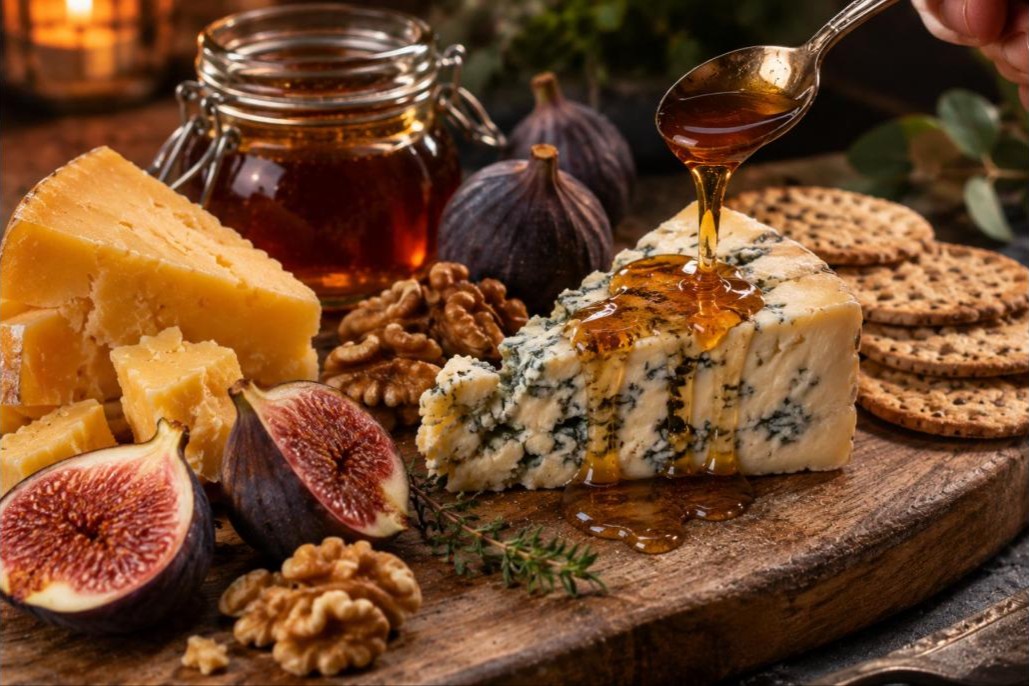
- Drizzle on yogurt, oatmeal, pancakes or a cheese board. Its caramel note pairs beautifully with aged cheddar and blue cheese.
- Stir into warm (not boiling) tea or a honey-lemon drink.
- Use in salad dressings and glazes where you want depth without heavy sweetness.
- Add it to a honey sampler to taste side-by-side with clover, buckwheat and manuka.
How to buy authentic jarrah honey
- Look for “product of Western Australia” and an independent TA test result on the label.
- Check for certification or authentication marks from Western Australian honey programs.
- Be wary of very cheap “jarrah blends,” which may contain only a small percentage of jarrah.
- Expect variation: research has found that some samples sold as jarrah were predominantly other eucalyptus nectars, so reputable brands with testing matter.
How jarrah honey is produced
Jarrah (Eucalyptus marginata) is a tall hardwood tree that grows only in the southwest of Western Australia. Beekeepers move their hives into jarrah forest when the trees bloom, usually in late spring and early summer. Jarrah does not flower heavily every year. Big flowering seasons are irregular and depend on rainfall and the trees’ growth cycles, so the supply of true jarrah honey varies a lot from year to year.
Western Australia is also known for its strict biosecurity rules around beekeeping, and its bee population has so far stayed free of varroa mites, which helps keep the region’s honey production chemical-light. Most jarrah honey is produced by small, family-run beekeeping businesses rather than large industrial operations.
Why jarrah honey stays liquid
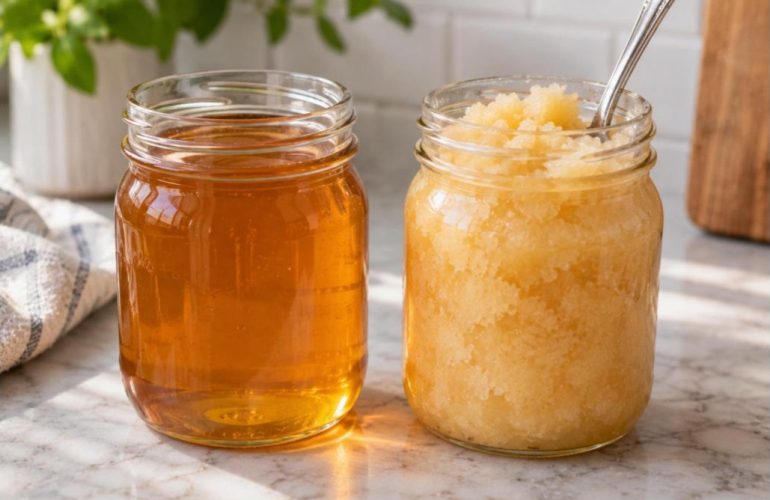
Jarrah honey is naturally high in fructose and low in glucose. Because glucose is what forms crystals, jarrah honey can stay smooth and runny for a long time, often years, while clover or canola honey may set within weeks. If your jarrah honey does crystallize, warm the jar gently in a bowl of warm water. See why honey crystallizes for the safe way to do it.
Is jarrah honey worth the price?
Jarrah honey costs more than everyday table honey for a few reasons: it comes from a single region, the trees flower unpredictably, and lab-tested “TA” ratings add cost. Whether it is worth it depends on how you use it:
- For flavor: many people love its rich caramel and butterscotch notes on toast, yogurt and cheese.
- For a soothing spoonful when you have a sore throat: any good honey helps; jarrah is a pleasant option, but you don’t need a premium honey for that.
- For topical use: follow a medical professional’s advice and use medical-grade products, not kitchen honey.
Storing jarrah honey
Keep it tightly sealed at room temperature, away from sunlight and heat. Avoid storing it near the stove or in the fridge. Use dry spoons, since moisture can lead to fermentation. Properly stored, it keeps its quality for a very long time.
Frequently Asked Questions
Is jarrah honey better than manuka?
Neither is strictly better. Jarrah has hydrogen-peroxide-based activity measured as TA and a caramel flavor; manuka gets its activity from methylglyoxal (MGO) and tastes earthier. Choose based on taste, budget and the type of activity you want.
Does jarrah honey crystallize?
Very slowly. Jarrah is high in fructose and low in glucose, so pure jarrah tends to stay liquid for a long time.
What does TA 20+ mean on jarrah honey?
It means lab testing measured a Total Activity of at least 20, an antibacterial strength rating relative to phenol. Higher numbers indicate higher measured activity.
Can diabetics eat jarrah honey?
Jarrah is still mostly sugar. Its higher fructose ratio may affect blood sugar differently than some honeys, but anyone managing diabetes should count it like other sweeteners and check with their healthcare provider.
Where is jarrah honey produced?
Only in southwestern Western Australia, where the jarrah tree is native.