Quick answer: To make beeswax wraps that cling, coat 100% cotton fabric with a melted blend of roughly 4 parts beeswax, 2 parts powdered pine resin and 1 part jojoba oil (by weight). Sprinkle or brush the mix onto fabric on a parchment-lined baking sheet, melt it in a 200–225°F oven for 3–5 minutes, spread it evenly with a brush, then lift the fabric and wave it for a few seconds to set. Beeswax alone works, but it won’t stick to itself well; the resin adds the cling.
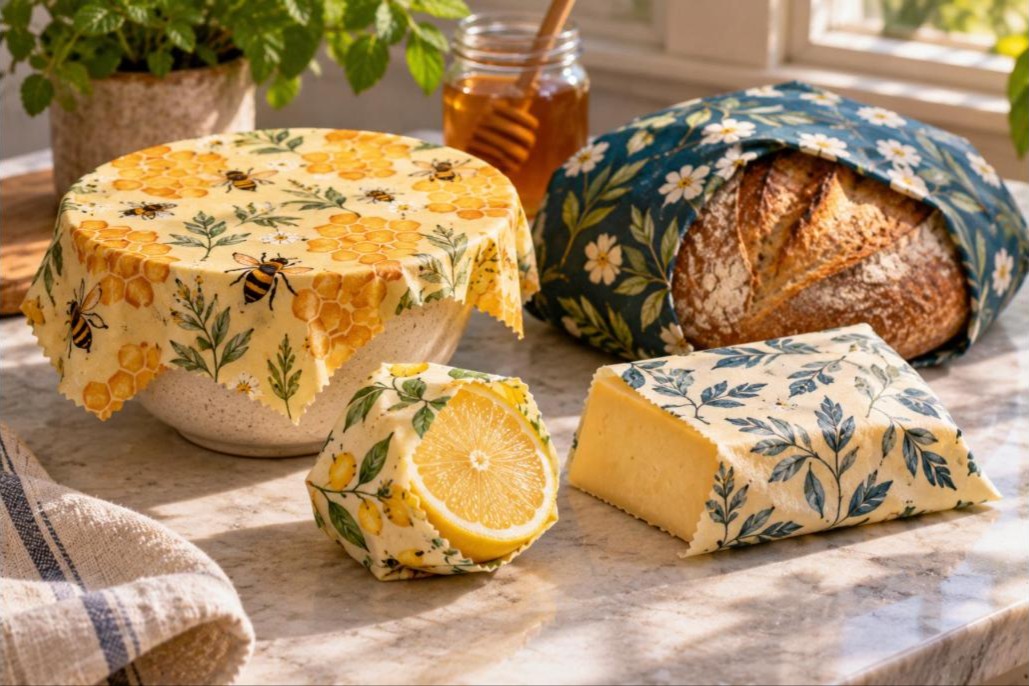
Beeswax wraps are washable, reusable covers for bowls, cheese, bread, produce and sandwiches. They’re one of the most practical things you can make with beeswax, and a set of homemade wraps makes a genuinely useful holiday gift.
What you’ll need
- 100% cotton fabric, pre-washed and dried with no fabric softener. Quilting cotton is ideal; avoid thick canvas or anything with synthetic fibers.
- Beeswax (pastilles or grated block)
- Pine resin, finely powdered. This is the secret to cling.
- Jojoba oil (or another stable liquid oil) for flexibility
- Pinking shears, parchment paper, a baking sheet, an old paintbrush, and clothespins or a hanger
- A double boiler or a dedicated tin can in a pot of water (optional, for the pre-mixed method)
The best ratio for cling
| Ingredient | Parts by weight | Example batch | Role |
|---|---|---|---|
| Beeswax | 4 | 80 g | Water resistance and structure |
| Pine resin | 2 | 40 g | Tackiness, so the wrap sticks to itself |
| Jojoba oil | 1 | 20 g | Flexibility, so it doesn’t crack |
That example batch covers roughly four or five medium wraps. If wraps feel too stiff, add a little more oil; if they’re too greasy, add more beeswax.
Recommended sizes
- Small, 7 × 8 inches: half a lemon or avocado, small jars
- Medium, 10 × 11 inches: cheese blocks, sandwiches, small bowls
- Large, 13 × 14 inches: salad bowls, half a melon, loaves
Step-by-step: oven method
- Cut fabric with pinking shears to prevent fraying.
- Pre-melt the coating (recommended). Melt the resin first in a double boiler (it takes longest), then add beeswax and jojoba and stir until smooth. Pour into a silicone mold to make “coating bars,” or keep it warm and liquid. Resin is sticky, so use tools you’ll dedicate to this project.
- Heat the oven to 200–225°F and line a baking sheet with parchment.
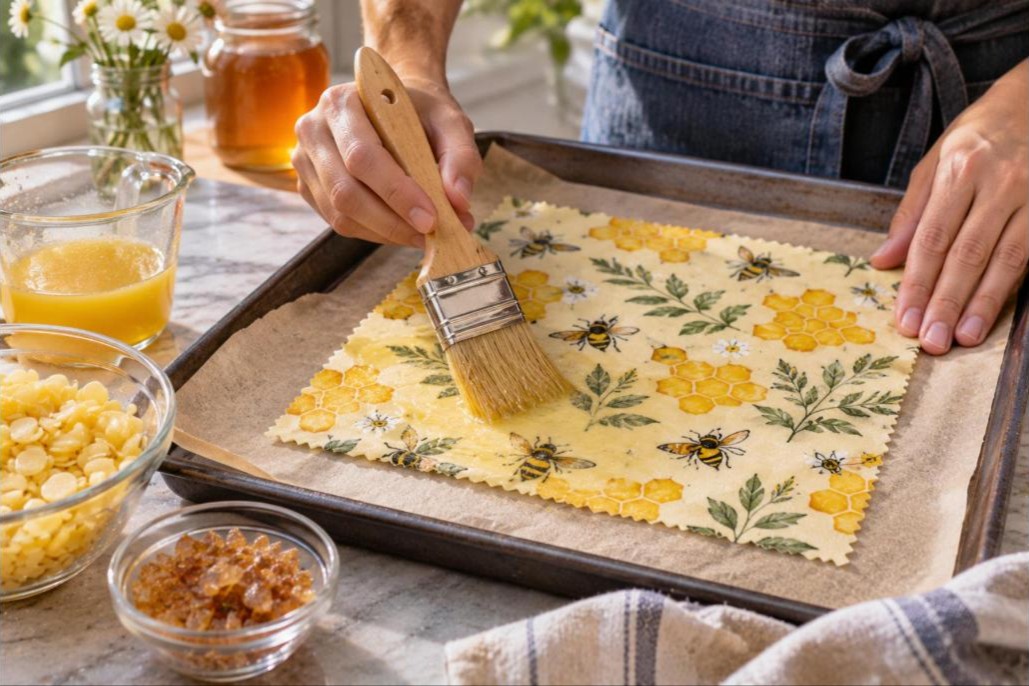
- Apply the coating. Lay a fabric piece on the sheet. Grate the coating bar over it, or brush on the melted mixture thinly and evenly, going all the way to the edges.
- Melt in the oven for 3–5 minutes until everything looks wet and soaked in.
- Spread. Brush quickly to push wax into dry spots and remove pools.
- Lift and set. Pick the fabric up by two corners and wave it for 10–20 seconds until it sets, then hang it to cool for a few minutes.
No oven? Use an iron: sandwich the fabric and coating between two sheets of parchment and press on low heat until melted through.
How to use beeswax wraps
Use the warmth of your hands to mold the wrap around a bowl or food. It softens slightly and grips as it cools. Good for bread, cheese, cut fruit and vegetables, herbs and sandwiches. Avoid using them with raw meat or fish, and keep them away from heat sources like the microwave, dishwasher or oven.
Washing and refreshing wraps
- Wash in cool water with mild dish soap, then air dry. Hot water melts the coating.
- Wraps last about 6–12 months with regular use.
- When they lose their cling or look patchy, refresh them: sprinkle a little extra coating and warm in the oven for 2–3 minutes, then spread and set.
- Worn-out wraps are cotton and wax, so they make great fire starters or compost (in pieces).
Troubleshooting
- Not sticky: add more pine resin to your next batch.
- Flaky or cracking: too much wax or not enough oil. Add jojoba.
- Greasy and leaves residue: too much oil or too much coating. Re-warm on fresh parchment to absorb the excess.
- Dry patches: add a sprinkle of coating and re-melt.
More beeswax projects
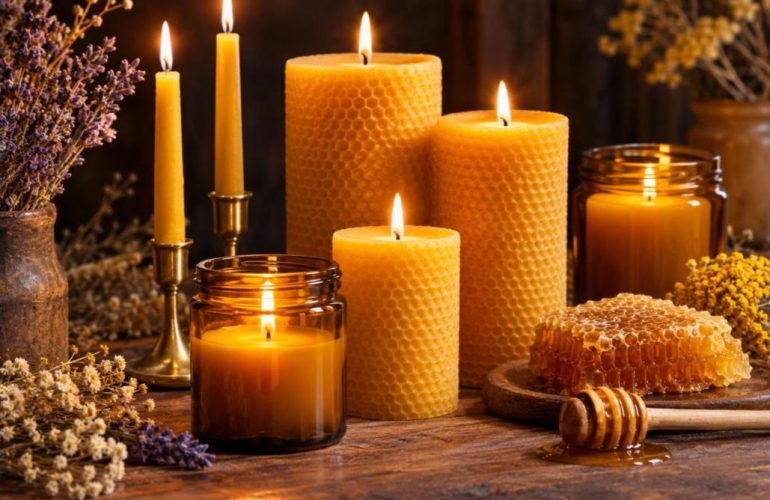
Have wax left over? Pour beeswax candles, make a batch of homemade lip balm, or bundle a few wraps into a honey gift basket.
Why make your own beeswax wraps?
Store-bought beeswax wraps often cost $15–$25 for a small pack. Homemade wraps cost a fraction of that, use up fabric scraps, and let you choose sizes and patterns that fit your kitchen. If you keep bees, they are also one of the best uses for clean cappings wax.
Choosing the right fabric
- Use 100% cotton: lightweight quilting cotton or cotton muslin absorbs the wax evenly and molds well.
- Avoid synthetics: polyester blends don’t absorb wax well and can melt in the oven.
- Pre-wash: wash and dry fabric first to remove sizing so the wax soaks in.
- Cut with pinking shears: the zigzag edge helps prevent fraying.
What not to wrap
- Raw meat or fish: wraps can’t be washed in hot water, so they can’t be properly sanitized afterward.
- Hot food: heat softens the wax. Let food cool first.
- Very acidic or oily foods for long periods: these can wear down the coating faster.
Wraps work best for bread, cheese, cut fruit and vegetables, sandwiches and covering bowls.
How long do beeswax wraps last?
With gentle care, wraps typically last about a year of regular use. When they lose their cling or look patchy, refresh them by sprinkling on a little grated beeswax and pine resin and warming them in the oven again. Once the fabric is worn out, cut it into strips and use it as a fire starter or compost it (cotton and beeswax are both natural materials).
Vegan alternative
For a plant-based version, replace beeswax with candelilla wax. Use a little less, since candelilla is harder, and keep the jojoba oil and resin the same. Expect the wraps to feel slightly stiffer.
Frequently Asked Questions
Why aren’t my beeswax wraps sticky?
Beeswax alone doesn’t cling well. Add powdered pine resin. A ratio of about 4 parts beeswax to 2 parts resin to 1 part jojoba oil by weight gives good cling.
Can I make beeswax wraps without pine resin?
Yes, but they’ll be less clingy. Wraps made with only beeswax and oil work for covering bowls with a rubber band or folding around sandwiches.
How do you clean beeswax wraps?
Wash in cool water with mild dish soap and air dry. Hot water and the dishwasher will melt the coating.
How long do beeswax wraps last?
Typically 6–12 months with regular use. You can refresh them with more coating to extend their life.
Are beeswax wraps safe for raw meat?
They’re not recommended for raw meat or fish, because you can’t sanitize them with hot water.